On Saint John the Evangelist
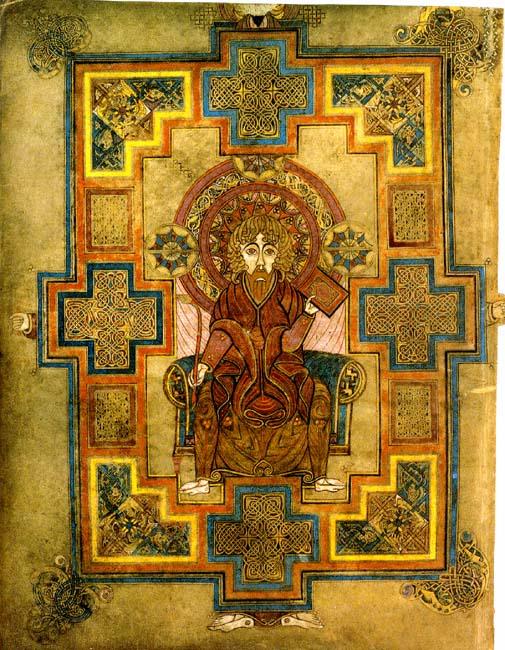
I have no discernible reason for it, but I have always loved Saint John the Evangelist. Since childhood he has been my favorite apostle, and his gospel among my favorite books of the Bible (Revelation, sometimes purported to be written by him, is my absolute favorite, if you must know). I used to have these thoughts that maybe I was related to him in some way (I was in second grade and a very strange child). I think it’s because he was spoken of as Jesus’ closest friend and I wanted to be that too.
Saint John, according to both the Bible and the tradition that helps us understand it, was one of two brothers who were fisherman, working for their dad, Zebedee. His brother James and he were part of Jesus’ inner circle, which also included Saint Peter. If memory serves, they were among the first five disciples called by Jesus (Andrew and Nathaniel being the others). Among the famous stories involving John is one where he wants to call thunder and lightning down on Jesus’ opponents—which Jesus dismisses—and granting him and James the nickname “the Sons of Thunder.”
If you subscribe to the view that the gospel of John was written by this Saint John (and given that our feast day is called “the Feast of Saint John the Evangelist,” Episcopal tradition does hold to this view, despite the long-standing controversy around that gospel’s authorship), then you’ll know that John was the one entrusted to care for Mary, Jesus’ mother, after the crucifixion and that he was privy to some elements of Jesus’ life that other evangelists were not (further, since we don’t actually know where the quotes in John 3 end, John may have been the one to pen the words of the most famous verse of the Bible—John 3:16—despite most “red letter” Bibles treating them as Jesus’ words).
John’s gospel has long stood out among the other four canonical gospels.

The other three gospels are called the “Synoptics” and contain a lot of overlapping material, whereas John has a lot of unique material as well as stories told in different orders (Jesus cleanses the temple in Jerusalem at the very beginning of His ministry, rather than near His arrest, for instance; John also includes the foot-washing but not the institution of the Eucharist at the last supper). Why is this? Well, scholars have their ideas (of course), but the longer tradition of the Church has held that John penned his gospel while he was in exile.
See, John was the only apostle to not be martyred. This was not for lack of trying. My church growing up had this weird poster in the library that showed how all the apostles were martyred. I used to look at John’s story all the time: he was stoned to death, but survived; he was thrown in boiling oil, but came out unscathed; since the dude could not be killed, the authorities exiled him to an island called Patmos, where he managed to keep on living and grew old; the authorities eventually just gave up on the old man and let him back into Asia Minor where he lived until his 90s and then died of old age.
The tradition holds that it was during those years of exile that he wrote. He wrote three letters, and a gospel, and then recorded the holy visions he had and mailed them to the churches he’d overseen (the visions collected into a volume the author himself called the Revelation of Jesus Christ—or, “Apocalypse” in his own language). This view helps explain why John is so different from the Synoptics. He had the other gospels and wanted to fill in blanks, or shift events around to help the Church see things from a different perspective (remember, ancient histories were not as concerned with what today think of as “accuracy”). Further, he had a lifetime of prayer and reflection under his belt and so wrote the most extensive theology about Jesus being God that had been written by that point (found in the first chapter of his gospel).
As I mentioned in yesterday’s post about Saint Stephen, a key theme of the days between Christmas and the feast of the Holy Name is suffering. Stephensmas and Johnsmas (I have no idea if that’s an accurate term) provide a degree of juxtaposition: we have one of the shortest saint’s lives held alongside one of the longest. Both are equally dedicated in their faith, articulate in their view of who Jesus is.
John also teaches us a way to see turmoil as a blessing. Patmos was supposed to be a place of agony and slow death. Instead, John saw it as a chance to reflect, pray, and record. He was likely the last living person who’d actually seen Jesus with his own eyes. He wanted to give the world a deeper view of Jesus—the Jesus he knew, the Jesus he loved.
Saint John spent a lifetime seeing the horrors of humanity. He stood at the foot of Jesus’ cross, after having witnessed Him being scourged. He lived through the violent deaths of his closest friends, all monstrously killed because of their faith in Jesus, His forgiveness of sins, and His promise of resurrection. He also saw that things were going to get worse. He saw the writing on the wall, as it were (to employ language from another apocalyptic figure). But on the other side of that, he saw that God’s love stands victorious. A day is coming, he writes, where “mourning, crying, and pain are no more.” A day where all things have been made as though they are new.
John reminds us that the Incarnation never ended. That God has made His home with us and that, in the end, the day will come where we will see that fact plainly:
Then the angel showed me the river of life-giving water, shining like crystal, flowing from the throne of God and the Lamb through the middle of the city’s main street. On each side of the river is the tree of life, which produces twelve crops of fruit, bearing its fruit each month. The tree’s leaves are for the healing of the nations. There will no longer be any curse. The throne of God and the Lamb will be in it, and his servants will worship him. They will see his face, and his name will be on their foreheads. Night will be no more. They won’t need the light of a lamp or the light of the sun, for the Lord God will shine on them, and they will rule forever and always.
Then he said to me, “These words are trustworthy and true. The Lord, the God of the spirits of the prophets, sent his angel to show his servants what must soon take place. (Revelation 22:1-7 CEB)
***
The Rev. Charles Browning II is the rector of Saint Mary’s Episcopal Church in Honolulu, Hawai’i. He is a husband, father, surfer, and frequent over-thinker. Follow him on Mastodon and Pixelfed.