On the Feast of the Name and Circumcision of Jesus
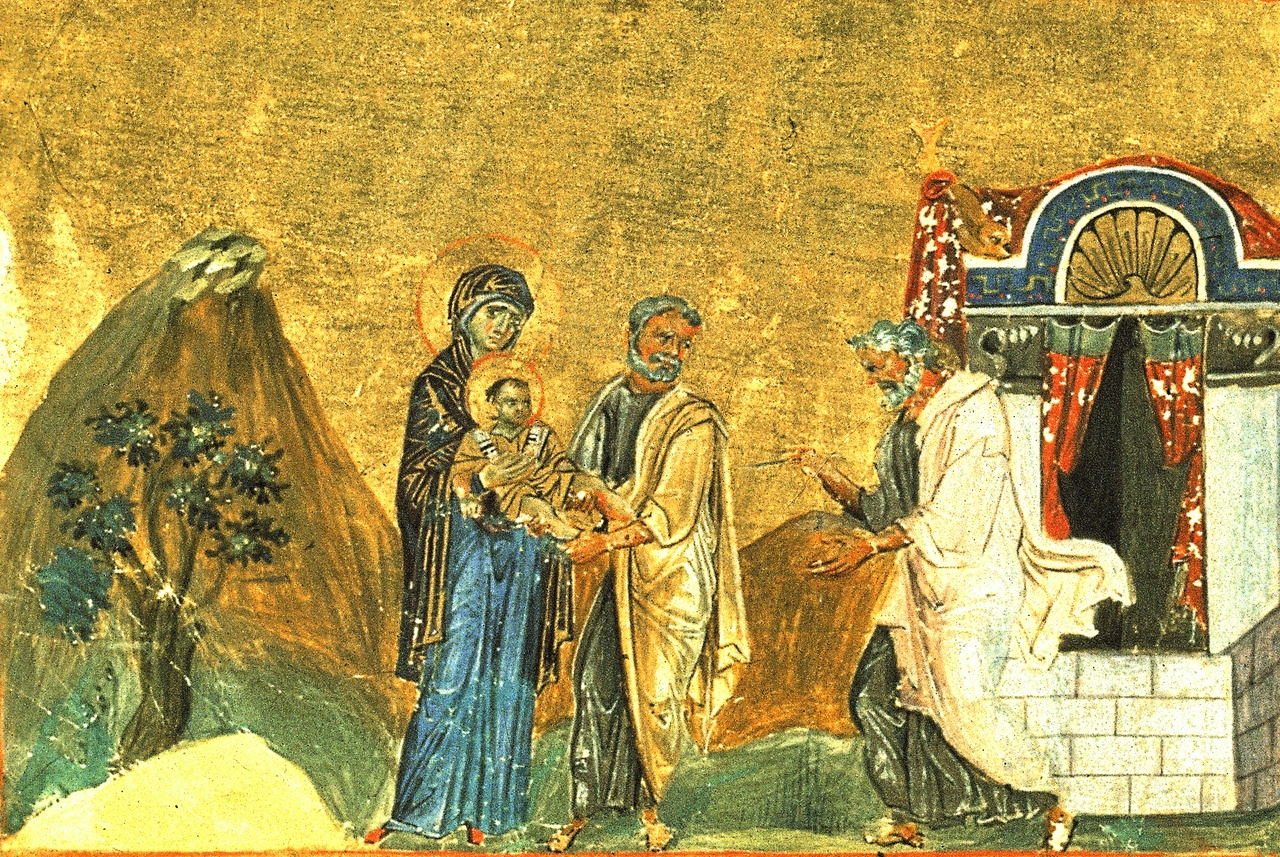
It is New Year’s Eve as I write this. Tomorrow not only marks the start of the Year of our Lord, 2026, it also marks the end of the first week of Christmas. The feast for that is one that we call the feast of the Holy Name of Jesus, but this is a more recent name. For much of Christian history, this has been known as the Feast of the Circumcision.
The readings for the day reflect this: “After eight days had passed, it was time to circumcise the child; and he was called Jesus, the name given by the angel before he was conceived in the womb” (Luke 2:21 NRSV). Matthew keeps thing brief by simply noting that Joseph names Jesus (indeed, the actual birth of Jesus more or less happens “off camera” in Matthew’s gospel). In Jewish custom, a male child is circumcised on the eighth day after birth, the number eight being significant as a marker of a new beginning. It was also the custom to declare the child’s name for the first time.
It is curious to me that we in the Episcopal Church opt to ignore the circumcision aspects of the feast day, especially given the fact that we’ve begun addressing areas prone to anti-Semitic interpretation in our liturgical calendar (with a lot of focus on how various readings from John’s gospel have been misconstrued for anti-Semitic purposes over the centuries). That Jesus was incarnate as a Jew is central to understanding Him. His being circumcised is what denotes Him as a Jew.
The scholar Susannah Heschel, the daughter of the great Abraham Heschel, wrote an excellent-though-disturbing book entitled Aryan Jesus that traces the development of Nazi theology and the anti-Semitic threads that ran through German theology going back at least as far as Martin Luther (who was famously anti-Semitic). She places a degree of importance on the liberal theological developments of the late 1800s and early 1900s and how much work was done to distance Jesus from His Jewish identity. Many of the scholars and theologians from this time managed to survive WWII and wound up working in American universities and seminaries. Since the US did not treat such academics as Nazis or Nazi sympathizers, they were able to operate fairly unnoticed, continuing to articulate a Jesus quite divorced from His Jewish heritage.
We see two lasting legacies of this work. The first is the continued treatment of gnosticism as a kind of suppressed “true” version of Christianity that the Church felt threatened by. One of the hallmarks of Christian gnostic ideas is that the God of Judaism is an evil being called the “Demiurge” who wants to enslave humanity in our material existence (with Jesus representing a true God of light that wants to free us from the corruptions of our flesh and materiality). Such gnostic ideas find a degree of resonance with schools of Buddhism, and this is the other legacy of the volkish, Nazi-adjacent theologies of early-20th Century German theology: the attempts to connect Jesus with Buddha. Putting Jesus closer to Buddhism takes Him further away from His Jewishness. Ironically, some of the most avowedly “progressive” people I know unwittingly subscribe to a theological line that was created by vile anti-Semites, but do so out of some desire to be inclusive.

The much-celebrated theologian Stanley Hauerwas says that Christians cannot be properly Christian without understanding themselves as Jewish first. In that same vein he would argue that Jesus cannot be properly understood without knowing Him as a Jew. Which means that we should be talking about the Feast of the Circumcision, even if the topic is uncomfortable. It is the only right and proper thing to do if we are serious about resisting anti-Semitism in our religion.
I spent the majority of my ordained ministry in Southeast Florida, the last six of which in Boca Raton before being called to Saint Mary’s. If you don’t know, Boca Raton has a very large Jewish population. I was also the head chaplain of an Episcopal School, which tends to draw students from the Jewish community (some estimates said that our student population was somewhere around 40% Jewish). Ministering in this context was invaluable for me in my own theological development. There are things about Jesus and the New Testament that I would never have picked up on had I not spent a ton of time around Jews. For instance, the notorious story of Jesus and the Syro-Phoenician woman (found in Mark and Luke) seems to most like a story of Jesus being a jerk to a woman in need, his reference to “throwing to dogs” what is meant for “the children” sounding like a racial slur. But this story is actually Jesus at His most rabbinical, teaching a lesson to His disciples in a manner quite consistent with the accounts of the rabbis in the Talmud and Mishna. I never would have caught this had I not been blessed with the opportunity to teach and lead worship with a large group of Jewish students.
In like manner, I would not have learned about the importance of names. Names in the Bible are not arbitrarily repeated because names in Judaism are not arbitrarily repeated. In some Jewish traditions, a child is only named after a dead relative—or after a hero of the faith, with the expectation that they will live according to the name given them.
Notice Joseph. We have two Josephs in our Bible: the child of Jacob/Israel, of technicolor-dream-coat fame and Mary’s husband, who helped raise Jesus. Both have parallel stories in that both are forced into Egypt for the express purpose of preserving God’s people. There’s also the fact that both Josephs are fathers to respective Jesuses.
New Testament Joseph is, of course, the “earthly” father of Jesus. Old Testament Joseph, Joseph ben Israel, went to Egypt. While there he married Asenath and had two children: Manasseh and Ephraim. For whatever reason, Joseph ben Israel does not get a tribe named after him. Instead, his two sons do. From Ephraim (after several generations) begets Nun, who begets Moses’ eventual second-in-command, Joshua. In Hebrew the name “Joshua” is rendered as Yeshua which is also translated in Greek as “Jesus.” This is cool for a couple of reasons.
First, the name means “God’s salvation/deliverer.” Joshua ben Nun is said to have delivered God’s people to their promised land and also liberated (saved) it from idolaters. Joshua/Jesus is, of course, the Savior or humanity and creation. Second, Judaism holds to an idea of two Messiahs, one from David’s lineage (the Mashiach ben David) and another from Joseph’s (the Mashiach ben Yosef), a Messiah that is destined to die in battle. The Gospels are more overt about Jesus’ connections to David, but these connections to Joseph ben Israel cannot be ignored. That God would want New Testament Joseph to name Mary’s son after the famed liberator Joshua helps to speak of the ways in which Jesus fulfills Jewish messianic prophecies—He’s both messiahs, one that dies and one that lives!
Again, these are the sorts of things we miss out on when ignore Jesus’ Jewishness. Indeed, an entire level of meaning of Jesus’ name is lost when we focus on the name at the expense of the circumcision. The two go together, as the scriptures attest.
We are told that Jesus’ name is the “name above all names,” a name at which “every knee shall bend.” That name is, inescapably, a Jewish name rife with Jewish meaning. This is a fact we ignore to our detriment.
In closing out this series on the week of post-Christmas commemorations, we return to the Child that started it all. And we consider once again the words of one the great hymns of this season:
What child is this, who, laid to rest, On Mary’s lap is sleeping, Whom angels greet with anthems sweet While shepherds watch are keeping? This, this is Christ the King, Whom shepherds guard and angels sing; Haste, haste to bring Him laud, The babe, the son of Mary!
This is Jesus, God’s salvation. This is Jesus, the King of the Jews. This is Jesus, the seed promised to Abraham, from which the entire world is blessed.
***
The Rev. Charles Browning II is the rector of Saint Mary’s Episcopal Church in Honolulu, Hawai’i. He is a husband, father, surfer, and frequent over-thinker. Follow him on Mastodon and Pixelfed.