There’s No Such Thing As Undeveloped Land
When I was a kid I used to dislike driving up to Deltona to visit my aunt and uncle. I generally liked my aunt and uncle, so it wasn’t them. It was the Deltona area at the time that garnered my disdain.
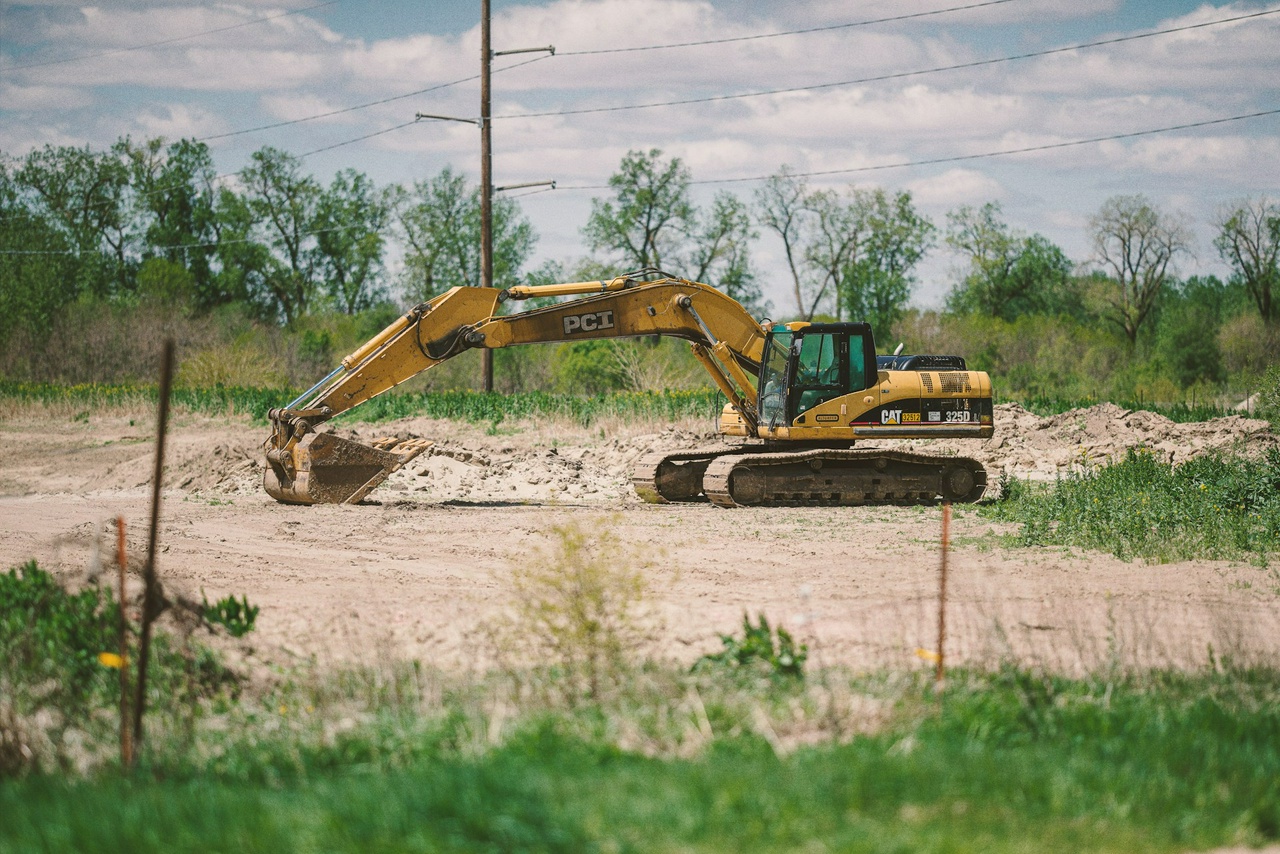
This was the early-to-mid-90s. Deltona is an early exurb of the Orlando, Florida area, really close to Sanford. Both communities were “developed” in the 1980s as a place for “starter homes” for new families. Centex Homes billboards were a regular sight on I-4 in those days, one of the leading companies building cheap houses all over Central Florida. Eddy, who was my youth pastor growing up and a mentor figure for me for many years, was a carpenter by trade and he helped build all the houses in the Deltona area. He said that he’d hop in the back of a truck to ride to the job site, dodging rattlesnakes to then get on a roof and just hop down the line of houses, moving from roof-to-roof. He told me that guys would sometimes attempt to kill rattlesnakes from the back of the truck by using rebar like a spear and throwing it at them.
“You had one shot,” he’d tell me from the driver’s seat of his van as we drove past the Deltona exit on our way to New Smyrna to surf, “a rattlesnake has like an 8-foot striking range, so if you missed there was a real risk that the snake could bite you in the truck bed.”
This story was often accompanied by a phrase I’m sure lots of us have heard before; that, before the houses, there was “nothing out here.”
Nothing.
This was what I didn’t like about Deltona. The surrounding area felt like there was nothing. Just miles and miles of what I would later come to know as “scrub pine”—forests of tall pine trees and small palms, the ground beneath being sand littered with pine needles, cones, and dry sticks. A landscape that seemed boring and banal. Tearing it up for houses and strip-malls seemed like an absolute improvement.
The epitome of land that is “undeveloped.”
My first memories of my mom as a working person were when she worked as the bookkeeper for a real estate developer. The concept of “undeveloped land” is something I unconsciously sublimated from my earliest years.
I remember when my childhood church, the First Baptist Church of Pine Hills, was eyeing its future growth and owned a 50-acre plot of land in the Ocoee area of Central Florida. Eventually this plot of land would become my high school and the main place of worship for the church. But when I was like 8 and we went out for the ground-breaking ceremony for the building that would house classrooms and a gymnasium, the area was a seemingly endless stretch of orange trees. There was one hill, heading West on Highway 50, that when it crested you could see almost all the way to Claremont. In 1990 it was a horizon of green, a single road bifurcating fields of citrus. Everyone who grew up in Florida prior to the 2000s likely has a story about some area that “used to be nothing but orange groves.”
But, to my mind, orange trees were something. Scrub pine was, truly, nothing.
***
When I was in seminary I was first exposed to the theologians of Radical Orthodoxy that would become deeply influential to me. In particular is Catherine Pickstock. A friend of mine had given me a burned CD of an interview she and John Milbank gave (I think to the BBC) and Pickstock said something that has stuck with me ever since: all things were created to worship and so when we look at a tree and see it as a being in worship this changes our relationship with the tree—it is no longer a commodity to be used but a creature that glorifies its creator.
Like I said, I this stuck with me and I think of it often, especially now that I live in Hawaiʻi which is a place that pretty openly celebrates the fellowship and sacred participation of all creatures. In Hawaiian thinking, trees and animals are a “people” who share our spaces with us and it is our kuleana (responsibility) to care for them and treat them as part of our ʻohana (which, as Lilo all taught us, means family). The continued use of valleys and islands for live-fire drills and bombing practice, the sullying of our wai (water), the loss of indigenous agriculture to pineapple and sugar farming to export wealth out of our communities is all seen as actions that hurt our family. The ʻaina (land) is part of us, is something that participates in a sacred life. Hawaiians rightly understand that all of creation worships its creator and so we are not free to casually exploit creation and treat it as a kind of impersonal “resource” for consumption.
Calling land “undeveloped” carries with it an assumption: that turning that land into something that can be monetized is the realized telos (its end or purpose, to use an academic theological term) of that land. The assumed thinking here is that a piece of land is effectively “wasting its potential” by simply existing.
Members of the Church are not innocent here. Centuries of interpreting passages about tilling the land or our God-given “dominion” over creation as though it is our obligation to transform land into something for financial gain have their genesis in various corners of the Church. The truth is that our “dominion” is supposed to look like the Kingdom of God, which is defined by Jesusʻ own humility. A gift that indigenous Christians give back to the Church is the reminder that our relationship with the land is defined by what Hawaiians call pono, which is most closely translated as “righteousness” (but is also deeply related to the concept of sovereignty). We are stewards of a creation that is not ours, set in the midst of a worshipful mosaic of fellow creatures, expected by God to do right by them.
I’m of the mind that Christianity itself has been the victim of a kind of intellectual colonization that has caused it to lose focus on things that Jesus called to our attention. Wealth-hoarders/addicts throughout generations have the habit of forcibly wrenching religious beliefs into something that supports their exploitative vision. Jesus, ever the agrarian, repeatedly directs our attention to the created world in order to teach us about the Kingdom of God—which is to say that the exploitative impulse we see coming from Christian Nationalists and others of their ilk is not something intrinsic to the Christian faith itself, but is the result of the colonizing impulse to rework anything and everything into justifying these actions.
The “undeveloped land” mindset is subtle. What starts as “there was nothing but orange trees” can quickly turn into “there was nothing.” And of course there was never nothing.
***
When I was in Thailand in 2007 I met guys who had grown up in the US while their dads were being educated for ministry. Once they returned to Thailand they took to their Thai culture to a degree that even astounded other Thai people. I went through a similar thing when I returned to Florida after my time in Northern Virginia/DC during seminary. I became extra Floridian.
An author who was important to me at this time was Jeff Klinkenberg. His Seasons of Real Florida should be required reading for anyone moving to the state. It was him who got me to understand that scrub pine land was far from “nothing.”
Turns out that this type of land, ubiquitous and seen as the kind of bland “cookie matrix” between the chocolate chips of “civilization” (to borrow an image from Chuck Palahniuk), is a completely unique ecosystem. It’s a rare example of a “wet desert,” meaning that even though the area gets rain like 200 days out of the year (calling Florida the “Sunshine State” is just the first of many falsehoods about the state that charlatans came up with to sell land starting in the 1800s) because the ground is mostly sand, the water doesn’t stay and runs through down to the aquifer beneath the surface. There are crazy lizards that swim in the sand. And the whole thing has evolved to rely on lightning.
See, scrub pine is sandy because it used to be ocean. Florida was basically an underwater sandbar until relatively recently (in a geological sense). The plants that grow there are opportunistic plants that have adapted to eke out enough moisture from the sand to thrive. That and they can make use of the consistent rain that falls (nearly every day in Central Florida is a thunderstorm starting around 3 pm). These tall and thin pine trees are also perfect lightning rods. The lightning strikes the palms, they catch fire. The fire opens their cones and the rising heat helps carry the seeds. The fire also burns off parasitic plants and over-zealous undergrowth. With Florida being the lightning strike capitol of North America, this is ideal.
Basically, this is an ecosystem that has adapted perfectly to its environment—one could argue that it does so in worshipful response to what God has ordained it to do, moving as it does through the long evolutionary process of God’s creative act. It’s a rare and beautiful thing when one really considers it.
But, it also so happens to be flat and easily transformable land that also just so happens to exist around some of the most active tourist hotspots in the world. Which means that it is not in the best interest for the investors that we see this land for what it is and celebrate it as a means to glorify God and draw us all closer into His love. No, it has to be seen as “undeveloped.” As “nothing.”
This scenario is playing out all over the world. You’ll hear this language as the wealth-addicts eye the construction of yet another data center. Or high-rise that will never be filled. Or shopping center that will put other places out of business. Or agriculture land that will grow corn or beef to be exported elsewhere at the expense of feeding the hungry who live in the detritus of what we might call “post-developed land.”
For us Christians there can be no such thing as “undeveloped land.” No vista contains “nothing.” Rather it is all rife with the creatures of our God and King, living in uninterrupted worship of Him.
“You love all things that exist and loathe none of the things that you have made, for you would not have made anything if you had hated it.” (Wisdom 11:24, ESV)
If God loves it, then we’re meant to love it. It’s not “undeveloped.” It’s something entirely more valuable.
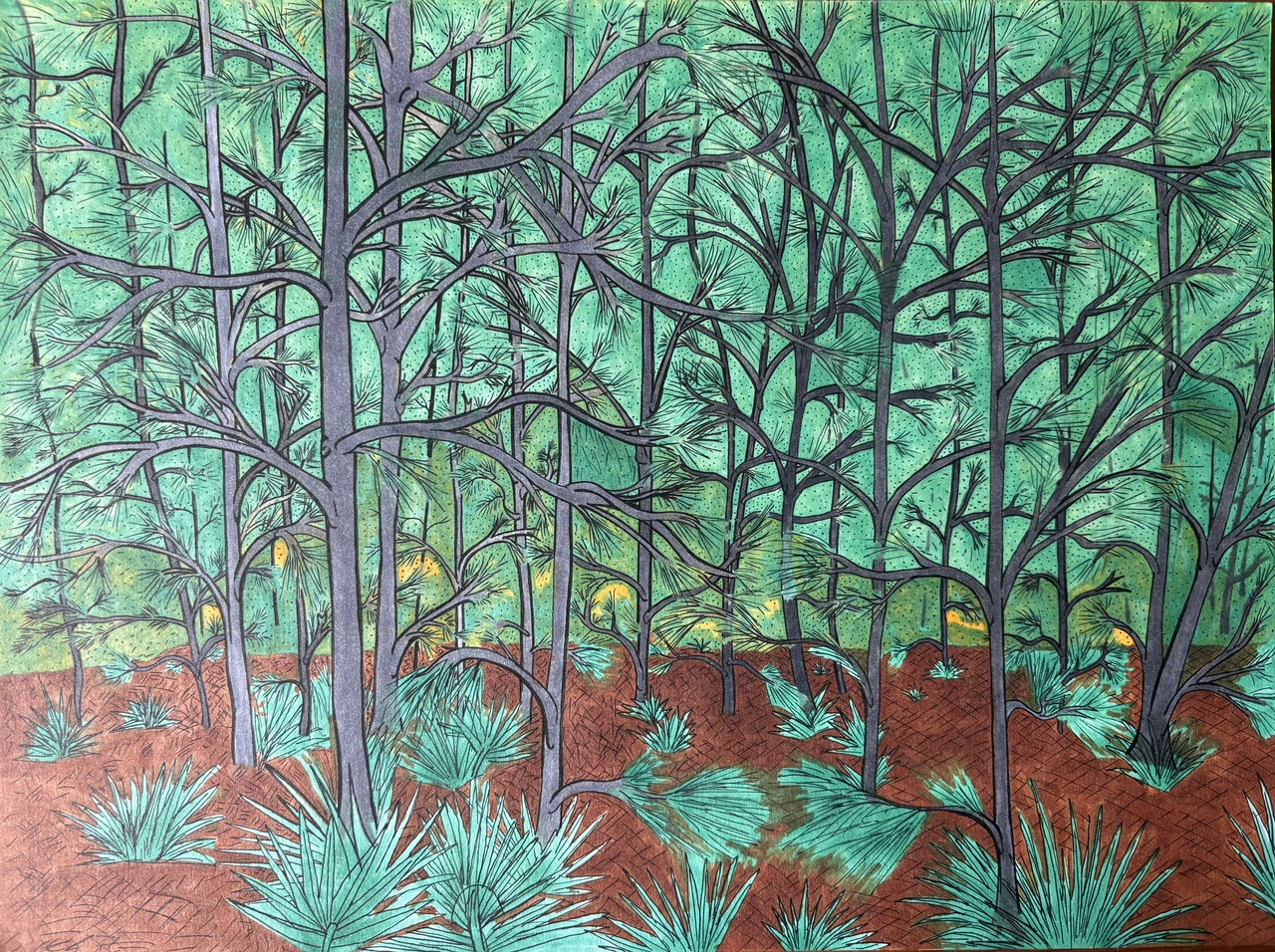 A pen and ink drawing of a scrub pine forest that I drew after learning to appreciate them
The Rev. Charles Browning II is the rector of Saint Mary’s Episcopal Church in Honolulu, Hawai’i. He is a husband, father, surfer, and frequent over-thinker. Follow him on Mastodon and Pixelfed.
#theology #nature #ecology #Jesus #Episcopal #Anglican #Christian #Bible
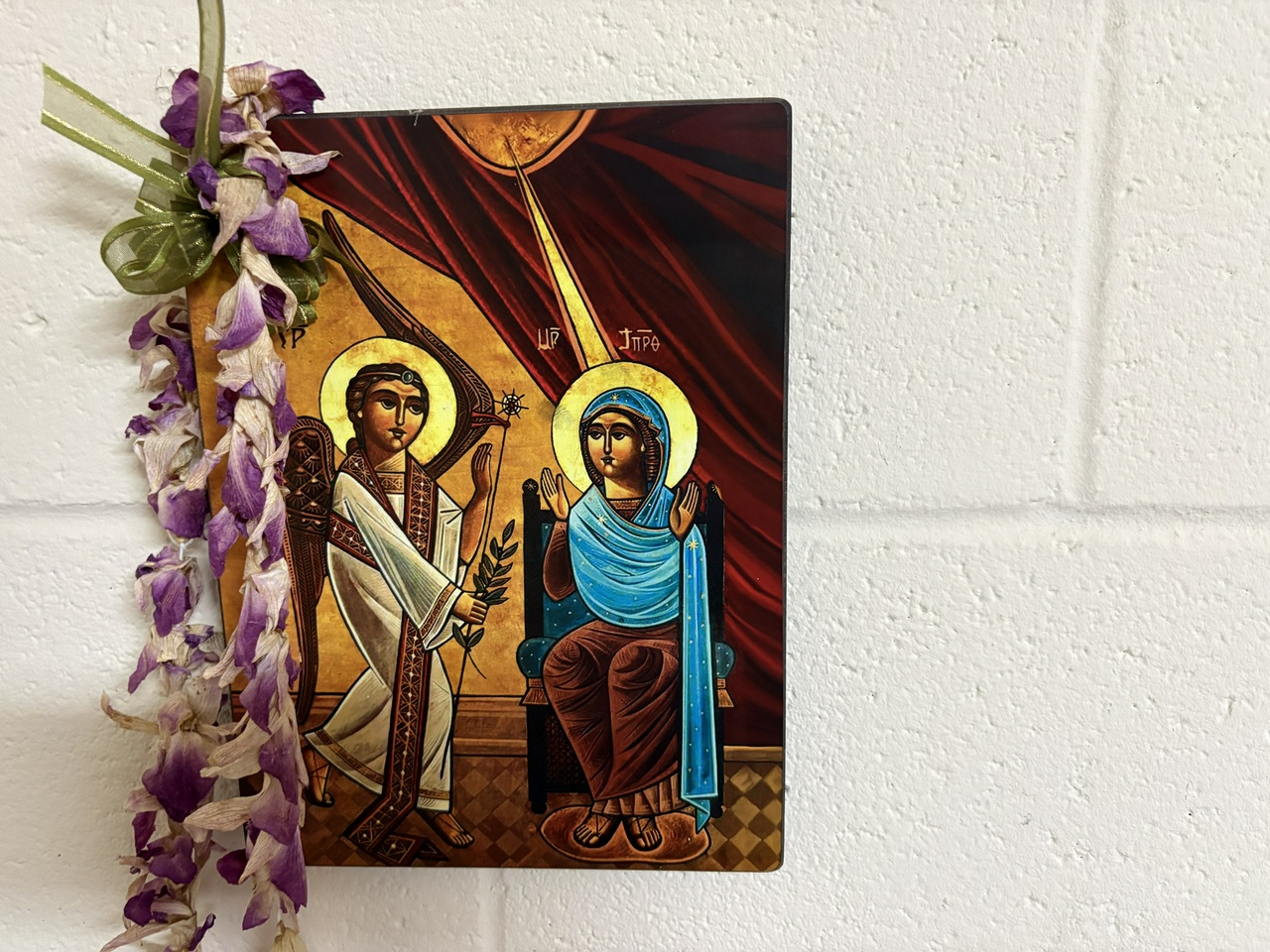
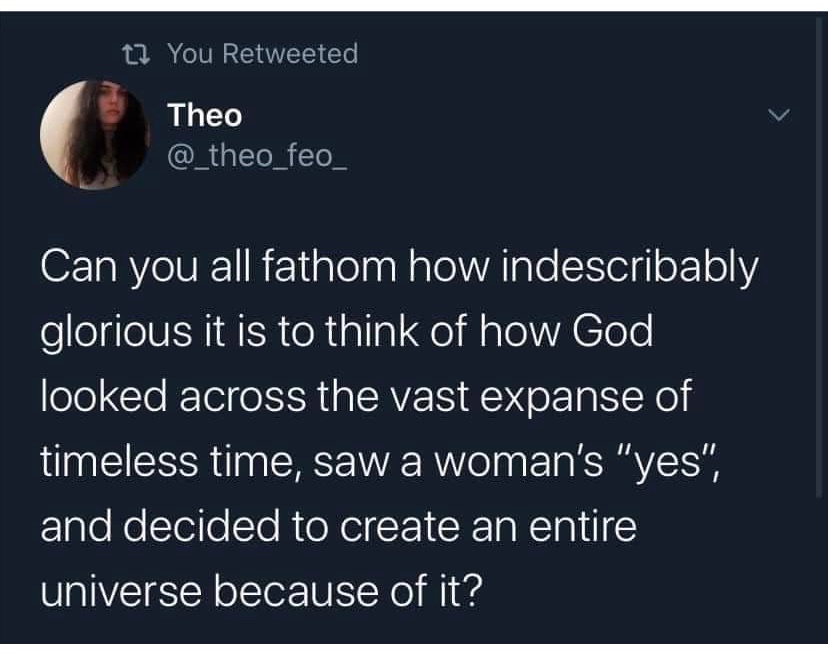 I think of this old tweet every year on this day. Credit to OP